ServiceNow CMDB enrichment
Configuration items in the CMDB carry vendor, model, and switch-port location automatically. The CIO's monthly executive report shows actual device counts, not the under-count from procurement records.

A typical four-year institution operates 45,000-plus endpoints across academic buildings, residential halls, research facilities, athletic operations, and the administrative network. The IT organization is federated. The security office reports up through one chain. The network team reports through another. Department heads run their own labs. CybrIQ produces a single inventory that each team can consume in the tool they already work in, without anyone having to learn a new dashboard.
Enterprise IT operates within a chain of approval. A new device usually means a procurement record, an IT ticket, an MDM enrollment, and a cost-center assignment. Higher education is structurally different. Faculty receive grant funding and buy lab instruments without consulting central IT. Departments operate their own micro-IT staff. Athletic operations contracts independently with AV integrators for video boards and play-clock systems. Student-affairs deploys digital signage in residence halls. Building services replaces HVAC controllers as part of capital projects. The official asset register tracks the slice of all this that flowed through the official channel.
The result is what most CIOs already know: the central asset list is a confident under-count. The number of devices on the campus network is somewhere between "what we have records for" and "what the network actually shows." Closing the gap manually is not a project that can be staffed.
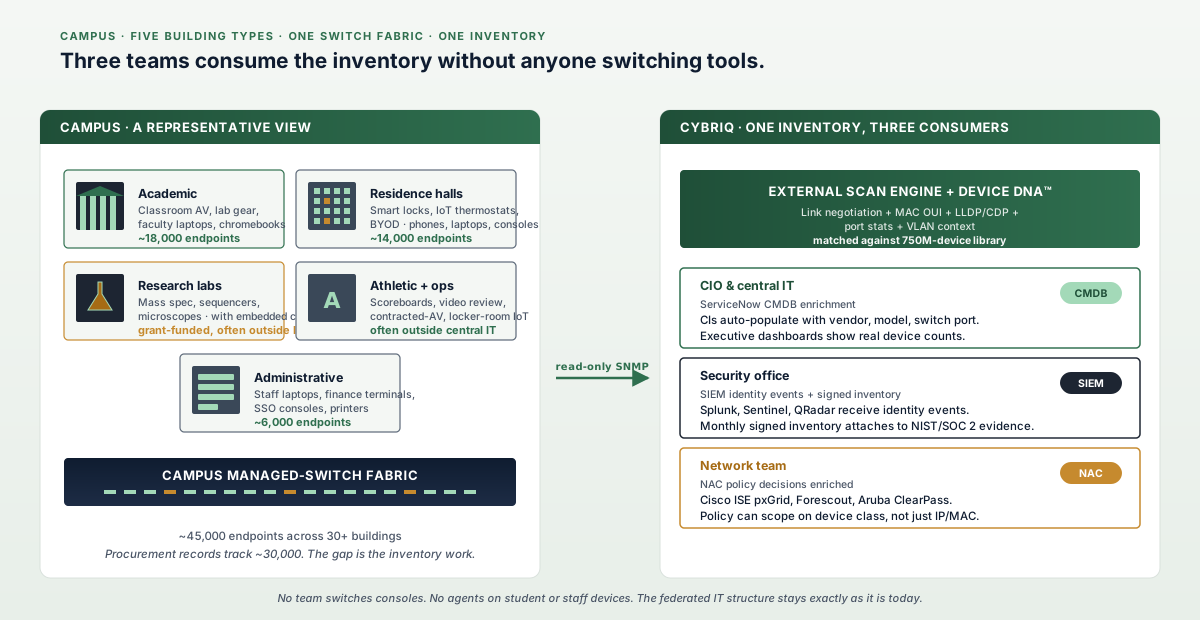
The CybrIQ inventory exits as structured data into the customer's existing systems. No team has to switch tools.
Configuration items in the CMDB carry vendor, model, and switch-port location automatically. The CIO's monthly executive report shows actual device counts, not the under-count from procurement records.
Identity events route to Splunk, Microsoft Sentinel, or QRadar so detection rules can scope on device identity, not just IP or MAC. The signed monthly inventory attaches to the institution's SOC 2 or NIST 800-171 evidence pack.
Cisco ISE pxGrid, Forescout, or Aruba ClearPass receives identity context when a device authenticates onto the network. The NAC team can write policies that scope on device class without manually maintaining authorization lists.
For a mid-size university (15,000 to 30,000 students, 30-plus academic buildings, six to twelve residence halls, two or three research-intensive lab buildings), CybrIQ deploys with one or two External Scan Engines depending on switch count. One ESE handles up to 500 managed switches; most campuses fit comfortably under that ceiling.
The deployment shape we see most often:
Most campuses we have spoken with see the first useful inventory output inside two weeks of credential handoff. Steady-state operations require roughly two hours per month from the security office to process the export.
CybrIQ does not see student records, course data, library checkout history, or email contents. Our scope is the network layer underneath the systems that hold those things. We see that a chromebook is on a port; we do not see what the student is doing on the chromebook. The privacy posture page covers the full position.
30 minutes with a CybrIQ engineer. We ask about your endpoint count, your federated IT structure, your current SIEM and NAC, and the audit or accreditation cycle driving the conversation. No proposal pressure.
Schedule a working session