Pattern 1 · Global enterprise · 1,800 rooms
Utelogy already running. Cyber-insurance renewal added CybrIQ.
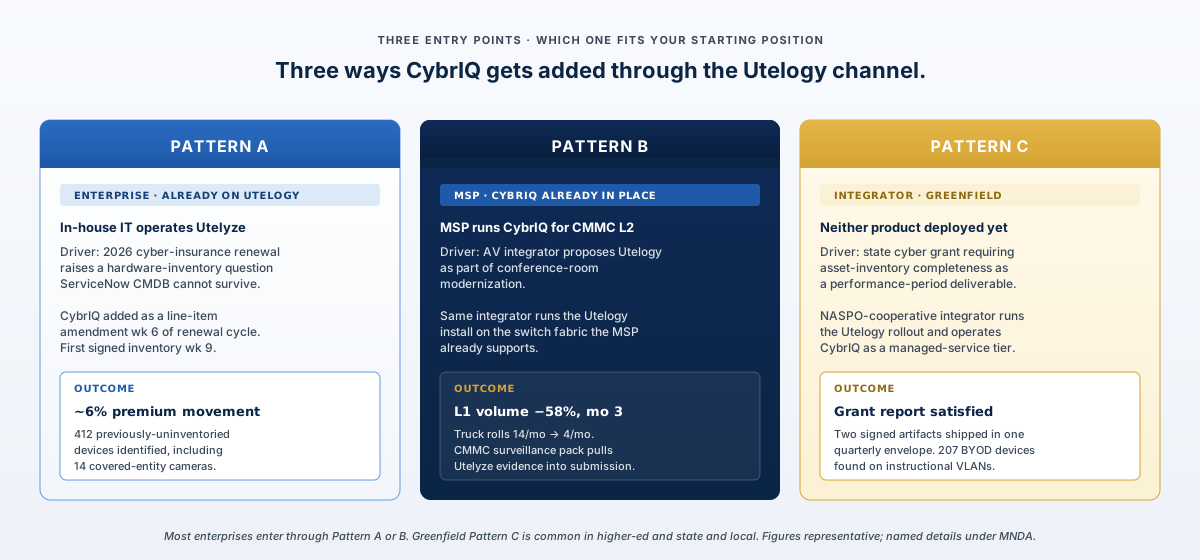
Context. A global manufacturer with 1,800 AV-enabled rooms across 47 sites had been running Utelogy for two years. Room-health monitoring was operational. The 2026 cyber-insurance renewal pulled forward six new questions on the hardware-inventory page of the application. The IT director's existing answer (“ServiceNow CMDB”) did not survive the underwriter's follow-up.
Deployment. CybrIQ added as a line-item amendment to the existing Utelogy contract in week 6 of the renewal cycle. ESEs sized to one per region cluster (5 ESEs total). Read-only SNMP credentials configured against the existing managed-switch fleet (4,200 switches in scope). First signed inventory shipped to the carrier in week 9. The customer’s in-house IT team continued operating Utelyze as before; the integrator operated CybrIQ end to end under a managed-service tier.
Outcome. Renewal premium reduced approximately 6% against the prior cycle. Underwriter notes specifically credited the “hardware-inventory and unauthorized-device-detection” answer set. As a side effect: 412 devices identified on conference-room ports that were not on the asset register at the start, including 14 covered-entity cameras shipped under non-covered labels.
Pattern 2 · Federal contractor · CMMC L2 first assessment
CybrIQ already running. Utelogy added during room-modernization.
Context. A defense contractor with 240 AV-enabled rooms across 6 facilities had deployed CybrIQ for CMMC 2.0 Level 2 hardware-inventory evidence (CM.L2-3.4.1 and adjacent). The audit closed. The facilities team then began an AV refresh on the conference-room portfolio, and the integrator proposed Utelogy as part of the modernization.
Deployment. Utelogy added on top of the existing CybrIQ install. The customer-installed deployment posture already approved by the program’s authorizing official; Utelogy fit the same constraints. The MSP continued operating CybrIQ; the integrator stood up the Utelogy rollout on the switch fabric the MSP already supported. First quarterly review delivered in month 2 with both vendors’ artifacts attached.
Outcome. L1 ticket volume dropped 58% in month 3 against the prior baseline. Truck rolls for AV-room incidents dropped from 14 per month to 4. The audit-prep package for the next CMMC surveillance cycle picked up the Utelogy continuous-monitoring evidence as supporting documentation for SI.L2-3.14.6 (Monitor System Communications). One less control to negotiate.
Pattern 3 · Higher education · research university
Neither tool deployed. Pairing chosen for an integrated rollout.
Context. A research university with 380 instructional rooms across 22 buildings was scoping an AV-modernization project funded partly through a state cyber grant. The grant's reporting requirements included asset-inventory completeness over the performance period. The university's existing inventory was a Microsoft Excel workbook last updated in 2023.
Deployment. Both products rolled out simultaneously, one building at a time, in the order the AV refresh visited each. The integrator (a NASPO-cooperative-purchasing partner) ran both installs in the same change-management window and operated CybrIQ end to end under a managed-service tier. The customer’s in-house IT team handled Utelyze.
Outcome. The grant performance-period reporting was satisfied from the two products’ signed outputs directly. The IT director’s quarterly review to the CIO shipped two signed artifacts (AV operations and security inventory) in one envelope. As a side effect: 207 BYOD devices identified on the instructional VLANs that the prior asset register did not list; the network team used that data to re-segment the guest VLAN.
Customer names, sites, and exact figures available under MNDA on the briefing call. The patterns above are representative of the three most common entry points into the channel arrangement; your specific outcome depends on the room count, existing AV stack, audit cadence, and integrator relationship.